Pages

Showing posts with label book review. Show all posts

Sunday, 9 January 2011

BOOK REVIEW: Thousand Sons by Graham McNeill

Censured at the Council of Nikea for his flagrant use of sorcery, Magnus the Red and his Thousand Sons Legion retreat to their homeworld of Prospero to continue their use of the arcane arts in secret. But when the ill-fated primarch forsees the treachery of Warmaster Horus and warns the Emperor with the very powers he was forbidden to use, the Master of Mankind dispatches fellow primarch Leman Russ to attack Prospero itself. But Magnus has seen more than the betrayal of Horus and the witnessed revelations will change the fate of his fallen Legion, and its primarch, forever.
The ground-breaking Horus Heresy series continues with Thousand Sons, the tale of Magnus the Red and his psychically gifted legion. Graham McNeil weaves a wonderfully crafted tale of arrogance, hubris and forces beyond the comprehension of mortal beings bringing about the tragic downfall of a loyal and gifted son, along the way revealing yet more layers to the already immersive universe.
The Thousand Sons are quickly set apart from their fellow legions by more than just their powers, their quasi-Egyptian naming structure lending them an exotic, mysterious edge (even if it is hard to remember who is who at times) whilst the obvious warrior-scholar nature of the Thousand Sons clearly contrasts with the purely martial bearing of other legions, notably the Thousand Sons bitter rivals- the Space Wolves. Fans of the legion will no doubt find this book a feast of information and back-history, though hardcore Space Wolves fans may smart a little at the almost bestial descriptions of the warriors of Russ.
The ...Sons themselves come across as intelligent and often likeable, 3-dimensional persona’s rather than simply vile traitors, lending an even more tragic feel to their inevitable doom, which any fan of WH40k knows is coming but can’t help wishing it could end some other way. The ...Sons fall, though born of their refusal to meet the edicts given by the Emperor himself at the Council of Nikaea, is brought about with grim resignation as Magnus receives visions of Horus’ treachery and knows the only way to warn his father would bring doom to his legion and his world, Prospero. Thus, the reader is left moved by the tragic fate of a legion, and a primarch, whose role in future of mankind, the Emperor tells us, was vital. We do not learn what that role truly was, and may never do, adding yet more tragedy to the situation. 
Magnus personifies his legion tenfold- it is his pride and vanity, his colossal ego telling him he could best whatever the warp could throw at him that ultimately leads to his demise.
If I could make a single complaint about this book, it would be that the powers wielded by even the newest line-troops of the Thousand Sons seem somewhat outlandish and outsized- in almost every combat enemies are dispatched with thunderbolts and fireballs, or crushed with psychic force or their blood boiled in their veins. Whilst their psychic powers are the stamp-mark of the legion, here it seems the Thousand Sons are way more powerful than their counterparts in other legions, who have only bolters and chainswords to fight with. I’m sure this is a difficult balance to achieve, but one that fell slightly on the wrong side here.
Aside from this issue, however, Thousand Sons is a powerful, intriguing and moving narrative that fans of the legion, the Horus Heresy series and, I’m sure, a few outsiders will surely enjoy.

Wednesday, 1 December 2010

BOOK REVIEW: A Fighter’s Heart by Sam Sheridan

A Fighter’s Heart is a fascinating journey through the world of professional fighting. The author, Sam Sheridan, finds himself in Australia with plenty of cash, a determination not to work until he has spent it all, and a single desire- to find out what makes two men want to get into a ring or a cage and inflict extreme physical harm upon one another, and then do it himself.

The narrative get’s going in Thailand, at a rural muay thai camp where the author has begun training. As someone who has been training muay thai for a few months now, and has his eye set on both Thai training camps and competitive fighting, I found this section interesting and informative, in the end only strengthening my desire to do both. Culminating in the author’s first ever fight, apparently against a Japanese heavyweight karate champion, this section of the book proves an excellent introduction to the devastating thai fighting style.

From here, Sheridan travels the globe pursuing the fighting arts. First off, a stint with MMA legend and so-called ’supercoach’ Pat Miletich (creator of the Miletich Fighting System and one of the pioneers of the new breed of ’can-do-everything’ fighters who are equally skilled in all elements of the game) in Iowa. Sheridan finds himself training with the likes of former UFC heavyweight champ Tim Sylvia, and takes part in his second fight, this time an MMA bout. Sheridan’s comments on the UFC and MMA in general make for some interesting reading, especially considering the progress the sport has made since.

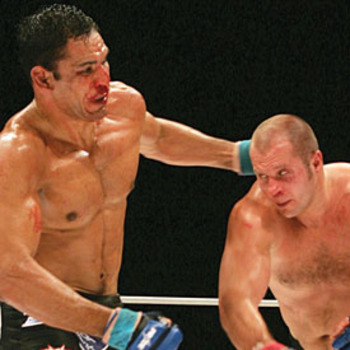
This is where things stall a little. A shoulder injury early on in his stint in Brazil learning BJJ sees Sheridan sit out the majority of his time there, instead focusing on the fights of others, including an Antonio Rodrigo Nogueira fight against Fedor Emelianenko in Pride FC. Interesting though this is, the reader is left feeling Sheridan’s disappointment- watching other people do stuff is all well and good, but you can’t learn something as complex as Brazilian Jiu-jitsu without doing it yourself.

Returning to the States, the author spends a little time with tai chi master C.C Chen, whose no-bullshit take on using tai chi for fighting leads to some interesting insights, though the section feels too short to fully pursue them. Next, he trains boxing with Virgil Hunter, which offers further insights this time into the world of boxing, its evolution and decline, though much of what is said in truth cements my lack of interest in boxing compared to muay thai and MMA. So far, however, Sheridan has been kept out of the ring since his MMA fight, largely by injury, and though we are told the point of his boxing training is to compete in an amateur bout, Sheridan eventually disposes of this idea. Instead, he says, he will return to Thailand to train and (he hopes) fight in Burma (or Myanmar as it is referred to here) where the fights are similar to Thailand, but bare-knuckle and with head butts allowed. This restores the reader’s excitement in the author fighting- Burmese lethwe fighting is the raw, bloody edge of modern ring fighting, without the cushion of protective gloves and with that savage, primal attack- form. But, alas, the fight does not pan out, and he returns to the US.

Further chapters cover dog fighting- a subject I am instinctively averse to but which was covered in an informative way that highlights the difference between the popular notion of fight-dog breeders (who, according to one guy he meets, do not ‘love’ their dog as a true trainer should) and the ‘professionals’ to be found in places like the Philippines- and a stint working with Pat Miletich on a film set. Though interesting in their own way, particularly the section on ’gameness’- the willingness to carry on after enduring more punishment than should be possible that makes a true fighter- these two chapters do not fit with the purpose of the book, and feel a little like filler.

The book is closed with perhaps its most interesting chapter, pulling together Sheridan’s experiences along with various scientific, psychological and often poetic interpretations on man’s need to fight.

Overall, this is an intriguing work and sure to be a hit with any fan or practitioner  of martial arts and fighting, though falls short of wider mass appeal. It’s a shame we couldn’t see more of the author actually fighting, but that’s life as a fighter- injuries happen, you just gotta suck it up and get on. Sam Sheridan understands that more than most.

Thursday, 11 November 2010

REVIEW: The Forgotten Legion- Ben Kane

The turbulent history of ancient Rome has become a popular subject of late, with books, TV shows and films popping up consistently. Ben Kane’s The Forgotten Legion takes a slightly different tune than most.
Set in the latter years of the Republic, as the First Triumvirate of Caesar, Pompey and Crassus struggled for power, it centres on four main characters whose stories weave together in a fascinating way.
Romulus is a fiery young slave, sold to the Ludus (a gladiator school) at fourteen by his harsh master, who becomes disgusted by the practice of slavery in Rome and, inspired by the tale of Sparatacus, harbours a deep desire to lead a similar slave revolt. His twin-sister, Fabiola, is at the same time sold to a brothel, though her quest is more personal- discover the identity of the noble who raped her mother years ago, and exact revenge.
In his time at the Ludus, Romulus becomes close friends with Brennus, a fearsome Gaulish fighter and sole survivor of the Allobroges tribe, haunted by the Roman destruction of his people, and the killing of his younger brother, his wife and his child.
Finally, Traquinius, an Etruscan haruspex (or soothsayer) is introduced early on, but only about halfway through the story does he encounter Romulus and Brennus. He is driven by the need to preserve the legacy of his race and vocation, which have been all but subsumed into the Roman culture.
There is some feeling of stock character types to them- the fiery, noble youngster; the proud old warrior and mentor; the wizened mystic and the beautiful, tragic young woman. However, Kane weaves their stories together in a compelling fashion that overrides these concerns easily. Of course, readers of Bahktin will probably see the connection to his concept of how all folk tales- the source of our modern stories- are made up of the same set of character types, but that’s a question for another day.
One of the interesting things about this novel is that, though it begins in Rome, by the end of the book, the three male characters are half the world away, on the furthest fringes of the Parthian empire. I won’t spoil how they got there, but suffice to say that they are swept up in the disastrous invasion of Parthia by Crassus.
Fabiola, meanwhile, keeps us updated with events in Rome and provides an anchor to the adventures of Romulus, Brennus and Tarquinius, reminding the reader of where this story truly centres. By acquiring Brutus, Caesar’s closest friend and ally, as a lover, Fabiola gives the reader a glimpse into the goings on at the highest echelons of Roman politics and society. Also, by forming a relationship between a fictional character and a historical figure, Kane adds a sense of realism and involvement that might otherwise have been missing.  
Now, it is clear from the outset that this is going to be a long and involved tale. Standing at some 500 pages, this is just the first in a series. As the final sentence comes to a close, you realise the story has only just begun, leaving the reader with a deep desire to simply go out and buy the next book so one can continue reading with barely a pause. Job done there then.
Some reviewers have picked up on a few historical inaccuracies, however, though I am usually a stickler for detail and realism in my historical fiction, here this doesn’t overly bother me. The story is compelling enough and the backdrop- Crassus’ invasion and the struggles of the Triumvirate- are accurate enough to avoid grating.
However, there were two things that did jar slightly. Firstly, the consistent and startling accuracy of Tarquinius’ prophecies, made from examining weather patterns and animal guts. This asks for a suspension of belief that may be a little too much, and seems to direct the flow of the story. However, this small bugbear does little to detract from the quality of the novel.
Secondly, Fabiola’s quest for information regarding the noble who raped her mother- and who therefore, we are told, is father to herself and Romulus- leads to suspicion falling on Julius Caesar, yet to make an actual appearance in the tale (something I have a feeling will be coming later on). Of course, I cannot truly know what kind of man Gaius Julius Caesar was, but nothing I have read about him implies he was a rapist. Having said that, the Roman culture was far removed from our own, and a young patrician raping a slave wouldn’t be considered worthy of a mention.
Overall, this is an intriguing and compelling opening to what promises to be a truly epic saga- I look forward to reading the next instalment.