The human experience involves an innumerable range of actions and emotions, many of them seemingly bizarre. As emotional, sentient beings, we are often led to do things by our ‘emotions’ that would seem strange, perhaps counter-productive or even self-destructive.
However, when one takes a step back from the immediate context of these actions and emotions, it is possible to see the true reasons for them. As a species, we have developed far beyond our original make-up, and the world we live in is vastly different in almost every possible way to that of our earliest ancestors. Despite this, we are still driven by many of the subconscious urges and instincts that evolved in early humans. Underlining all of these is the simplest, strongest and most vital drive any living species can posses- the survival instinct.
So much of what we do, consciously and subconsciously, our actions and emotions and experiences, can be traced back to this singular instinct of survival, whether of the individual or the species. For example, take perhaps one of the most intriguing aspects of human existence- the concept of ‘love’. We now know that the heady, often confusing and always powerful feelings we describe as ‘love’ are brought about by a particular biochemical reaction in our brain. When two human specimens subconsciously see themselves as ideal mating partners this reaction takes place in order to drive their conscious brain to pursue the match, resulting in strong offspring as well as increasing the chances of lifelong mating partners and the creation of a family unit- all of which helps to ensure the offspring have the best possible chance of survival.
In the modern world, with the astounding advances we have made in communications and travel, there is a great deal of mixing between the original genetic races of humanity. Thus, xenophobia and racism have come to be seen as modern ills, as symptomatic of the barbarism that threatens to engulf the progress of ‘civilisation’. However, this is not so. The world of our earliest ancestors was one in which people gathered into small tribal or even familial groups, with much less ability to travel great distances than today. Therefore, outsiders to the group were likely to look different in some way. And, in the harsh, animal world of ‘kill or be killed’, any outsider could be a grave threat. Therefore, it is logical that man would develop a mistrust, fear or even hatred for anything that differs from the status quo of his particular group.
Today, we struggle with the concept of racism. In public we decry it as a terrible crime- as, taken to its fullest extent, it surely is. Yet in private, we may laugh at a ‘racist’ joke or have similar thoughts we would perhaps not utter aloud. We feel ashamed for those thoughts, driven on by the relentless pursuit of a politically-correct utopia in which nothing of true worth is said or done, for fear of breaking these self-constructed taboos. We are all a little bit racist, not because we are vile and disgusting human beings, but because it is a throwback to a time when such an impulse could be the difference between life and death. A time that may yet return.
And finally, a phenomenon which encapsulates so much of what humanity is- war. Almost every war we have fought was over money or land or power. All three equate to a single, all-important position- dominance. Dominance over a neighbour means the removal of any threat from them and the continued assurance of survival. Even the most vicious attack dog will cease trying to tear your throat out once it has pissed on you, symbolically dominating you and removing any threat you may have posed.
The survival instinct is the most basic yet potent drive we have. It dominates our actions and thoughts, often in ways we do not see. In an existence that maintains, at least to our perception, the strict divide between existence and non-existence, such a thing is vital. Without it, the human race would most likely have died out a long time ago.
In Part II I will discuss the value of survival deeper, so keep an eye out.
Tuesday, 26 April 2011

Wednesday, 23 February 2011
The fighter’s tragedy
Fight fans worldwide will have been saddened by the recent post-fight speech by MMA legend Fedor “The Last Emperor” Emelianenko in which he intimated that he is considering retiring from the cage. This came immediately after Fedor’s shock defeat to Antonio “Bigfoot” Silva in the first round of Strikeforce’s Heavyweight Grand Prix, with the Russian sambo expert looking painfully disappointed.

When asked if he was considering retirement, Fedor replied "Yes, maybe, it's the last time. Maybe it's high time. Thanks for everything. I spent a great beautiful long sport life. Maybe it's God's will."
After my initial shock at the possibility of MMA losing perhaps its greatest ever fighter, without even seeing him in the world’s premier fighting league, the UFC, I started to think about the deeper implications of all such announcements.
 Fighters, perhaps more than any other sportsmen, know that they have a limited time at the top level. With a few notable exceptions, in particular UFC Hall of Famer Randy Couture, fighters of every style, talent and disposition must be aware that the day will come when they are simply not as strong, as fast or as fit as they once were. The accumulated damage fighters are prone to taking during a lengthy career exacerbates this decline significantly, with many fighters who once seemed invincible finding a knockout is something they are increasingly prone to experiencing.
Therefore, every fighter who reaches, and passes, the apex of their career is left with a huge, and undoubtedly painful, choice: to continue fighting, and risk seeing their career come to a close with undignified losses as they fa\il to recapture their former power, or perhaps in the ignominy of fighting in lower promotions; or to gracefully bow out of the game and leave their fans cherishing the best moments of their career.

Such a decision cannot be made lightly, and is surely made ever harder by the circumstances in which it almost always comes about. A fighter who is winning will always think he can win the next fight. Such confidence is a vital part of any successful fighter’s character. They must believe, without question or self-doubt, that they are capable of winning. Going into a fight without this attitude always ends in defeat, and possibly serious damage. Therefore, the tipping point at which the fighter reaches this decision will not come about after a win. It inevitably comes about only after a defeat, most likely consecutive defeats. The loss to Silva was the first time Fedor suffered consecutive defeats, following his surprise submission via triangle choke by Fabricio Werdum last year.
But the same drive which pushes the fighter to seek the next victory will also drive him (or her) to want to bounce back from a defeat, to at least end their career in a blaze of glory with one final, stunning win. It is easy to imagine the setting, almost like a Hollywood movie, where the once down-and-out fighter picks himself up, trains hard until he makes some grand self-realisation, and goes on to win the title before bowing out gracefully. The truth, however, is far less prosaic. Win a fight and you look to the next one, win a title and you want to defend it. But when the fighter is left with little other conclusion than he is past his best, then and only then will they face the prospect of ending their career.

Fedor is still a fantastic fighter with a lot to offer. His defeats, to me, do not indicate that he is past it by any stretch. Silva was a much bigger, heavier opponent in a game where weight counts for so much. Werdum was a BJJ specialist who caught Fedor from his guard, a fact remarkable not in that it happened but in that it took so long to do so. Fedor remained unbeaten for about 10 years, an astonishing achievement given the scale and quality of opponents he has faced.
With his recent election to the Russian Senate, Fedor is certainly thinking about his future. No-one can fight forever, and he can surely walk away from MMA with his head held high, looking forward to a new career. But one can only imagine the pain this decision is causing him. You need only look at his face (the half that wasn’t swollen out of all proportion) after his loss to Silva to prove that.
This is something all great fighters must face, sooner or later. If this is to be the end for Fedor, we should remember him not for the manner of his exit, but for the many unbelievable victories he achieved, the fact that he has dominated this sport for a decade. Fedor Emelianenko can surely stand beside the fighting world’s greatest names. Let him be honoured in the memory of fight fans for a long time to come.
Thankfully, on his return to Russia, Fedor is quoted as saying he intended to continue fighting. With all due respect to Antonio Silva, who was an impressive and worthy winner, a true legend like Fedor Emelianenko deserves to go out better than a by doctor’s stoppage. I look forward to seeing him fight again, and hopefully we will see Fedor prove himself a champion at least one more time.

When asked if he was considering retirement, Fedor replied "Yes, maybe, it's the last time. Maybe it's high time. Thanks for everything. I spent a great beautiful long sport life. Maybe it's God's will."
After my initial shock at the possibility of MMA losing perhaps its greatest ever fighter, without even seeing him in the world’s premier fighting league, the UFC, I started to think about the deeper implications of all such announcements.

Therefore, every fighter who reaches, and passes, the apex of their career is left with a huge, and undoubtedly painful, choice: to continue fighting, and risk seeing their career come to a close with undignified losses as they fa\il to recapture their former power, or perhaps in the ignominy of fighting in lower promotions; or to gracefully bow out of the game and leave their fans cherishing the best moments of their career.

Such a decision cannot be made lightly, and is surely made ever harder by the circumstances in which it almost always comes about. A fighter who is winning will always think he can win the next fight. Such confidence is a vital part of any successful fighter’s character. They must believe, without question or self-doubt, that they are capable of winning. Going into a fight without this attitude always ends in defeat, and possibly serious damage. Therefore, the tipping point at which the fighter reaches this decision will not come about after a win. It inevitably comes about only after a defeat, most likely consecutive defeats. The loss to Silva was the first time Fedor suffered consecutive defeats, following his surprise submission via triangle choke by Fabricio Werdum last year.
But the same drive which pushes the fighter to seek the next victory will also drive him (or her) to want to bounce back from a defeat, to at least end their career in a blaze of glory with one final, stunning win. It is easy to imagine the setting, almost like a Hollywood movie, where the once down-and-out fighter picks himself up, trains hard until he makes some grand self-realisation, and goes on to win the title before bowing out gracefully. The truth, however, is far less prosaic. Win a fight and you look to the next one, win a title and you want to defend it. But when the fighter is left with little other conclusion than he is past his best, then and only then will they face the prospect of ending their career.

Fedor is still a fantastic fighter with a lot to offer. His defeats, to me, do not indicate that he is past it by any stretch. Silva was a much bigger, heavier opponent in a game where weight counts for so much. Werdum was a BJJ specialist who caught Fedor from his guard, a fact remarkable not in that it happened but in that it took so long to do so. Fedor remained unbeaten for about 10 years, an astonishing achievement given the scale and quality of opponents he has faced.
With his recent election to the Russian Senate, Fedor is certainly thinking about his future. No-one can fight forever, and he can surely walk away from MMA with his head held high, looking forward to a new career. But one can only imagine the pain this decision is causing him. You need only look at his face (the half that wasn’t swollen out of all proportion) after his loss to Silva to prove that.
This is something all great fighters must face, sooner or later. If this is to be the end for Fedor, we should remember him not for the manner of his exit, but for the many unbelievable victories he achieved, the fact that he has dominated this sport for a decade. Fedor Emelianenko can surely stand beside the fighting world’s greatest names. Let him be honoured in the memory of fight fans for a long time to come.
Thankfully, on his return to Russia, Fedor is quoted as saying he intended to continue fighting. With all due respect to Antonio Silva, who was an impressive and worthy winner, a true legend like Fedor Emelianenko deserves to go out better than a by doctor’s stoppage. I look forward to seeing him fight again, and hopefully we will see Fedor prove himself a champion at least one more time.
Sunday, 30 January 2011
The privilege of choice
For a number of years I have struggled to reconcile two beliefs: first, a conviction that a great deal of the social problems that blight many communities have far deeper roots than simple idleness, immorality and malice. This sort of thinking would seem backward to the Victorian philanthropists who first worked to alleviate the poverty and social oppression that was destroying working class society. Second, a refusal to allow these deeper causes to become an excuse, both for those involved in these issues and those who seek to understand them.
Recently, I managed to reconcile these beliefs.
It came from a simple realisation. Yes, there are a great many root causes behind such ills as poverty, crime, worklessness, social immobility and community breakdown that go beyond individual faults. Many honest, decent people are trapped in these vicious cycles through no fault of their own, and it is societies obligation to seek to understand these problems and help those who are afflicted by them. But that does not extenuate the individual from guilt for his own actions. We must all take final responsibility for what we do, or do not do.
This simple truth seems to be sadly lacking from much of the political discourse of our times. The coalition government often seems to regard the welfare state as solely the recourse of bone-idle job dodgers, drug addicts and criminals. But neither did Labour’s blind attempt to solve the problem by throwing money at it and smothering it in a blanket of beauracracy and pseudo-sociological excuses get us anywhere.
Humans have evolved to become rational, thinking beings capable of great mental, emotional and spiritual complexity. This is not a right. As far as we know, we are alone on this planet in possessing this gift. It is a privilege. A privilege that, like most, comes with responsibilities. The fact that we can make rational choices based not (at least, not entirely) on our basic instincts or external influences, obligates us to make these choices and not shrink behind the cover of excuses.
For example, all these scumbags running around our streets attacking innocent people for no reason other than the way they look, or for easy cash, or whatever their reason. Over the last few years we have seen example after example of decent people who did nothing wrong having their lives ruined by meaningless violence. To stamp on someone’s head for a laugh is not a choice any rational being worthy of the privilege should be making. It is a choice made by people who do not deserve to be treated with the respect of a human being, a respect they clearly give no other. It is a choice below that of a rabid dog. The dog does not have the privilege of choice. It is driven by a instinctual violence and aggression, magnified by the powerful disease into something that even a strictly train specimen cannot overcome. It does not make a clear, rational choice like we can.
We all have choices to make. Every single day of our lives we are presented with choices, some huge, many small. Whether we make the right choice or not, we should never forget that it is a privilege to make a choice at all.
Recently, I managed to reconcile these beliefs.
It came from a simple realisation. Yes, there are a great many root causes behind such ills as poverty, crime, worklessness, social immobility and community breakdown that go beyond individual faults. Many honest, decent people are trapped in these vicious cycles through no fault of their own, and it is societies obligation to seek to understand these problems and help those who are afflicted by them. But that does not extenuate the individual from guilt for his own actions. We must all take final responsibility for what we do, or do not do.
This simple truth seems to be sadly lacking from much of the political discourse of our times. The coalition government often seems to regard the welfare state as solely the recourse of bone-idle job dodgers, drug addicts and criminals. But neither did Labour’s blind attempt to solve the problem by throwing money at it and smothering it in a blanket of beauracracy and pseudo-sociological excuses get us anywhere.
Humans have evolved to become rational, thinking beings capable of great mental, emotional and spiritual complexity. This is not a right. As far as we know, we are alone on this planet in possessing this gift. It is a privilege. A privilege that, like most, comes with responsibilities. The fact that we can make rational choices based not (at least, not entirely) on our basic instincts or external influences, obligates us to make these choices and not shrink behind the cover of excuses.
For example, all these scumbags running around our streets attacking innocent people for no reason other than the way they look, or for easy cash, or whatever their reason. Over the last few years we have seen example after example of decent people who did nothing wrong having their lives ruined by meaningless violence. To stamp on someone’s head for a laugh is not a choice any rational being worthy of the privilege should be making. It is a choice made by people who do not deserve to be treated with the respect of a human being, a respect they clearly give no other. It is a choice below that of a rabid dog. The dog does not have the privilege of choice. It is driven by a instinctual violence and aggression, magnified by the powerful disease into something that even a strictly train specimen cannot overcome. It does not make a clear, rational choice like we can.
We all have choices to make. Every single day of our lives we are presented with choices, some huge, many small. Whether we make the right choice or not, we should never forget that it is a privilege to make a choice at all.
Saturday, 22 January 2011
The existential acceptance
Even a moderately sustained consideration of epistemology- the study of the nature of knowledge and thought- will lead, sooner or later, to a single brutal, honest admission. An admission that, for a brief yet punishing moment, may leave one deeply unsettled. It is an admission, a realisation, and eventually an acceptance, that I found myself facing recently.
We simply cannot know.
 There are a great many things we cannot know with absolute certainty in the course of our lives, and most likely we will pass from existence without ever knowing. Fundamental questions about our nature, about the universe and all of existence, are perhaps so fundamental that they cannot be answered. Ever.
But this is not what I speak of. By paring back these questions that rely yet on fundamental assumptions, on the fundamental assumption, by considering them over and over that single assumption can be separated from the rest and held up for what it is.
It is the oldest question of philosophy and epistemology, the one upon which all such bodies of thought rest, the question with which Descartes and countless others wrestled without ever fully besting:
Do I truly exist, and how can I ever be really sure of it?
 Do I truly exist? The age old question that philosophers have loved to wax lyrical over for centuries. But, perhaps, this is still one of those fundamental questions we could never truly know. Cogito ergo sum- ‘I think, therefore I am’- has been challenged through the centuries yet seems to, largely, hold up. But such a simple, obvious expression of rationalist logic cannot grasp the complexity, the uncertainty, the in-deterministic nature of our existence. Nor does it account for the existence of anyone or anything else bar the subject’s consciousness. The subjects physical body, even, may simply be an illusion.
Yes, we may perceive the universe as purely deterministic, as cause and effect, as a + b = c, yet perception is not necessarily truth. Perhaps our linear, deterministic perception is merely a hazy afterimage, like the shadows cast by the sun. Perhaps our minds, clearly far from their full evolutionary potential (whether for good or ill, I shudder to think), cannot endure the full complexity and chaos of existence, the absence and falsehood of the fundamental assumptions we hold so dear. We simply cannot know.
And here we come to crux of the matter- we cannot ever be truly, utterly sure of our existence, independent of our surroundings.
Not in the utter surety we look for in our lives, that we tell ourselves we see everywhere, because to accept otherwise might render us totally incapable of living the lives our simple, linear minds set for us.
The honest mind, upon making this admission, must come to accept it with that familiar incongruous duality of our race. We must accept the uncertainty, the frail incompetence of our minds to even begin to truly understand a universe, an existence far larger, more complex and more chaotic than we could possibly know. And for a long, torturous moment, we must let ourselves bask in that knowledge, to glory in the sheer, terrifying freedom that comes with releasing the human impulse to always know, always understand, and to accept that we simply cannot know for sure.
Wisest is he who knows he does not know.
Perhaps Socrates, the father of western philosophy, was way ahead of us all.
We simply cannot know.

But this is not what I speak of. By paring back these questions that rely yet on fundamental assumptions, on the fundamental assumption, by considering them over and over that single assumption can be separated from the rest and held up for what it is.
It is the oldest question of philosophy and epistemology, the one upon which all such bodies of thought rest, the question with which Descartes and countless others wrestled without ever fully besting:
Do I truly exist, and how can I ever be really sure of it?
Yes, we may perceive the universe as purely deterministic, as cause and effect, as a + b = c, yet perception is not necessarily truth. Perhaps our linear, deterministic perception is merely a hazy afterimage, like the shadows cast by the sun. Perhaps our minds, clearly far from their full evolutionary potential (whether for good or ill, I shudder to think), cannot endure the full complexity and chaos of existence, the absence and falsehood of the fundamental assumptions we hold so dear. We simply cannot know.
And here we come to crux of the matter- we cannot ever be truly, utterly sure of our existence, independent of our surroundings.
Not in the utter surety we look for in our lives, that we tell ourselves we see everywhere, because to accept otherwise might render us totally incapable of living the lives our simple, linear minds set for us.
The honest mind, upon making this admission, must come to accept it with that familiar incongruous duality of our race. We must accept the uncertainty, the frail incompetence of our minds to even begin to truly understand a universe, an existence far larger, more complex and more chaotic than we could possibly know. And for a long, torturous moment, we must let ourselves bask in that knowledge, to glory in the sheer, terrifying freedom that comes with releasing the human impulse to always know, always understand, and to accept that we simply cannot know for sure.
Wisest is he who knows he does not know.
Perhaps Socrates, the father of western philosophy, was way ahead of us all.
Sunday, 9 January 2011
BOOK REVIEW: Thousand Sons by Graham McNeill
Censured at the Council of Nikea for his flagrant use of sorcery, Magnus the Red and his Thousand Sons Legion retreat to their homeworld of Prospero to continue their use of the arcane arts in secret. But when the ill-fated primarch forsees the treachery of Warmaster Horus and warns the Emperor with the very powers he was forbidden to use, the Master of Mankind dispatches fellow primarch Leman Russ to attack Prospero itself. But Magnus has seen more than the betrayal of Horus and the witnessed revelations will change the fate of his fallen Legion, and its primarch, forever.

The ground-breaking Horus Heresy series continues with Thousand Sons, the tale of Magnus the Red and his psychically gifted legion. Graham McNeil weaves a wonderfully crafted tale of arrogance, hubris and forces beyond the comprehension of mortal beings bringing about the tragic downfall of a loyal and gifted son, along the way revealing yet more layers to the already immersive universe.
The Thousand Sons are quickly set apart from their fellow legions by more than just their powers, their quasi-Egyptian naming structure lending them an exotic, mysterious edge (even if it is hard to remember who is who at times) whilst the obvious warrior-scholar nature of the Thousand Sons clearly contrasts with the purely martial bearing of other legions, notably the Thousand Sons bitter rivals- the Space Wolves. Fans of the legion will no doubt find this book a feast of information and back-history, though hardcore Space Wolves fans may smart a little at the almost bestial descriptions of the warriors of Russ.
The ...Sons themselves come across as intelligent and often likeable, 3-dimensional persona’s rather than simply vile traitors, lending an even more tragic feel to their inevitable doom, which any fan of WH40k knows is coming but can’t help wishing it could end some other way. The ...Sons fall, though born of their refusal to meet the edicts given by the Emperor himself at the Council of Nikaea, is brought about with grim resignation as Magnus receives visions of Horus’ treachery and knows the only way to warn his father would bring doom to his legion and his world, Prospero. Thus, the reader is left moved by the tragic fate of a legion, and a primarch, whose role in future of mankind, the Emperor tells us, was vital. We do not learn what that role truly was, and may never do, adding yet more tragedy to the situation.
Magnus personifies his legion tenfold- it is his pride and vanity, his colossal ego telling him he could best whatever the warp could throw at him that ultimately leads to his demise.
If I could make a single complaint about this book, it would be that the powers wielded by even the newest line-troops of the Thousand Sons seem somewhat outlandish and outsized- in almost every combat enemies are dispatched with thunderbolts and fireballs, or crushed with psychic force or their blood boiled in their veins. Whilst their psychic powers are the stamp-mark of the legion, here it seems the Thousand Sons are way more powerful than their counterparts in other legions, who have only bolters and chainswords to fight with. I’m sure this is a difficult balance to achieve, but one that fell slightly on the wrong side here.
Aside from this issue, however, Thousand Sons is a powerful, intriguing and moving narrative that fans of the legion, the Horus Heresy series and, I’m sure, a few outsiders will surely enjoy.
Wednesday, 8 December 2010
Strength is born of necessity
"Strength is born of necessity"
A late night conversation a few days ago saw this little comment come out of me, practically without thought. And since, I have realised how true it is. The strength to endure the things that life throws at us is born out of the necessity to bear them. Without suffering, without fear and pain and grief, there is no strength. Without these things, we remain as weak and helpless as the day we were born.
Most of us go through times where things are so bad it seems impossible to bear. But you get through, because you have to, because there is no other option other than the complete submission of one’s dignity, pride and honour.
We endure because we must, but we must endure in order to become stronger.
A late night conversation a few days ago saw this little comment come out of me, practically without thought. And since, I have realised how true it is. The strength to endure the things that life throws at us is born out of the necessity to bear them. Without suffering, without fear and pain and grief, there is no strength. Without these things, we remain as weak and helpless as the day we were born.
Most of us go through times where things are so bad it seems impossible to bear. But you get through, because you have to, because there is no other option other than the complete submission of one’s dignity, pride and honour.
We endure because we must, but we must endure in order to become stronger.
Wednesday, 1 December 2010
BOOK REVIEW: A Fighter’s Heart by Sam Sheridan

The narrative get’s going in Thailand, at a rural muay thai camp where the author has begun training. As someone who has been training muay thai for a few months now, and has his eye set on both Thai training camps and competitive fighting, I found this section interesting and informative, in the end only strengthening my desire to do both. Culminating in the author’s first ever fight, apparently against a Japanese heavyweight karate champion, this section of the book proves an excellent introduction to the devastating thai fighting style.
From here, Sheridan travels the globe pursuing the fighting arts. First off, a stint with MMA legend and so-called ’supercoach’ Pat Miletich (creator of the Miletich Fighting System and one of the pioneers of the new breed of ’can-do-everything’ fighters who are equally skilled in all elements of the game) in Iowa. Sheridan finds himself training with the likes of former UFC heavyweight champ Tim Sylvia, and takes part in his second fight, this time an MMA bout. Sheridan’s comments on the UFC and MMA in general make for some interesting reading, especially considering the progress the sport has made since.
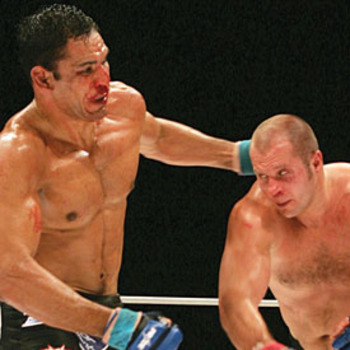
This is where things stall a little. A shoulder injury early on in his stint in Brazil learning BJJ sees Sheridan sit out the majority of his time there, instead focusing on the fights of others, including an Antonio Rodrigo Nogueira fight against Fedor Emelianenko in Pride FC. Interesting though this is, the reader is left feeling Sheridan’s disappointment- watching other people do stuff is all well and good, but you can’t learn something as complex as Brazilian Jiu-jitsu without doing it yourself.
Returning to the States, the author spends a little time with tai chi master C.C Chen, whose no-bullshit take on using tai chi for fighting leads to some interesting insights, though the section feels too short to fully pursue them. Next, he trains boxing with Virgil Hunter, which offers further insights this time into the world of boxing, its evolution and decline, though much of what is said in truth cements my lack of interest in boxing compared to muay thai and MMA. So far, however, Sheridan has been kept out of the ring since his MMA fight, largely by injury, and though we are told the point of his boxing training is to compete in an amateur bout, Sheridan eventually disposes of this idea. Instead, he says, he will return to Thailand to train and (he hopes) fight in Burma (or Myanmar as it is referred to here) where the fights are similar to Thailand, but bare-knuckle and with head butts allowed. This restores the reader’s excitement in the author fighting- Burmese lethwe fighting is the raw, bloody edge of modern ring fighting, without the cushion of protective gloves and with that savage, primal attack- form. But, alas, the fight does not pan out, and he returns to the US.
Further chapters cover dog fighting- a subject I am instinctively averse to but which was covered in an informative way that highlights the difference between the popular notion of fight-dog breeders (who, according to one guy he meets, do not ‘love’ their dog as a true trainer should) and the ‘professionals’ to be found in places like the Philippines- and a stint working with Pat Miletich on a film set. Though interesting in their own way, particularly the section on ’gameness’- the willingness to carry on after enduring more punishment than should be possible that makes a true fighter- these two chapters do not fit with the purpose of the book, and feel a little like filler.
The book is closed with perhaps its most interesting chapter, pulling together Sheridan’s experiences along with various scientific, psychological and often poetic interpretations on man’s need to fight.
Overall, this is an intriguing work and sure to be a hit with any fan or practitioner of martial arts and fighting, though falls short of wider mass appeal. It’s a shame we couldn’t see more of the author actually fighting, but that’s life as a fighter- injuries happen, you just gotta suck it up and get on. Sam Sheridan understands that more than most.
Subscribe to:
Posts (Atom)